Nov. 17, 2025
The introduction of induction cooktops in the kitchen appliance market, particularly in China, marks a significant evolution in cooking technology. As homeowners seek to improve their culinary experiences, the demand for efficient, safe, and high-performing cooking solutions has surged. Induction cooktops have emerged as game-changers, addressing common pain points such as slow cooking times, high energy consumption, and safety concerns. With their ability to heat up rapidly and provide precise temperature control, induction cooktops offer an innovative way to cook, thus transforming daily cooking routines.
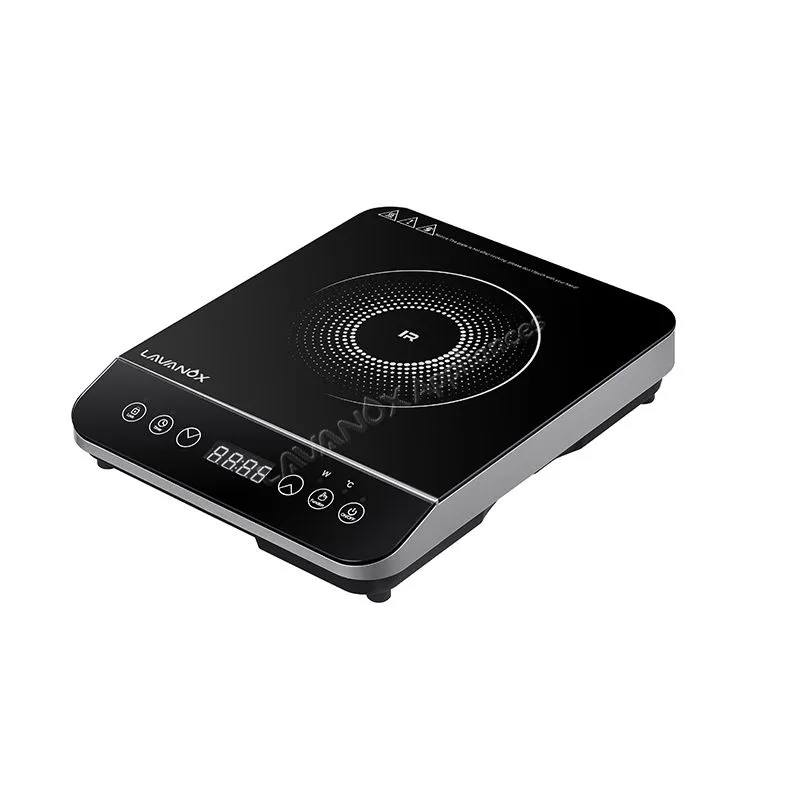
Induction cooktops utilize magnetic fields to heat cookware directly, instead of relying on traditional thermal conduction. According to the U.S. Department of Energy, induction cooking is about 70% more efficient than traditional gas or electric cooktops because it only heats the pan and not the surrounding air. This efficiency translates to faster cooking times—induction cooktops can bring water to a boil in approximately 4-6 minutes, compared to 10-12 minutes on a traditional stovetop.
In technical terms, induction cooktops work by generating a magnetic field that induces electrical currents in iron-based cookware. This process is known as electromagnetic induction. The result is immediate heat, which not only saves energy but also reduces the risk of burns, making it a safer option in homes with children.
Induction cooktops are commonly used in various applications, including residential kitchens, restaurant settings, and professional culinary environments. They are favored by chefs and home cooks alike for their speed and precision. Additionally, induction cooktops are increasingly being integrated into modern smart kitchens, allowing for touch control, timers, and connectivity features that enhance user experience.
According to a report by Grand View Research, the global induction cooktop market is expected to reach $18.3 billion by 2025, driven by their growing popularity in urban households and new construction projects.
The significance of induction cooktops lies in their numerous advantages:
Energy Efficiency: Induction cooktops convert over 84% of energy into cooking heat. This is a stark contrast to gas cooktops, which only convert about 40% of energy, resulting in lower energy bills.
Speed: As mentioned, induction cooking can cut boiling time by up to 50% compared to traditional methods. For instance, bringing 1 liter of water to a boil typically takes just under 6 minutes on an induction cooktop.
Safety: Induction cooktops cool down rapidly once the cookware is removed, reducing the risk of burns. This is especially beneficial in households with children, as the surfaces remain cooler to the touch.
Precision Cooking: Induction cooktops allow for precise temperature adjustments, enabling techniques such as simmering and sautéing with accuracy. Users can control temperatures down to specific degrees, enhancing the cooking process.
Ease of Cleaning: With a flat surface, spilled food doesn’t burn onto the stovetop, making cleaning straightforward. A simple swipe with a damp cloth is usually sufficient.
For those interested in further exploration of induction cooktops, a user guide is an excellent starting point to understand the unique features and functionalities. Brands like Lavanox offer a range of high-quality induction cooktops, catering to both beginners and experienced cooks. Consumers are encouraged to conduct trials and experiments to fully appreciate the ease and efficiency of induction cooking.
Yes, induction cooktops can reach high temperatures quickly, making them ideal for techniques such as frying and searing. Most models can generate temperatures above 500°F (260°C), sufficient for various cooking applications.
Yes, induction cooktops require magnetic cookware. Stainless steel and cast iron are good options, while aluminum and glass are not compatible unless they have a magnetic base.
Induction cooktops are approximately 70-80% more efficient than electric cooktops and up to 50% more efficient than gas cooktops, translating to significant energy savings.
While induction cooktops do require a standard electrical outlet, it is essential to ensure that your home’s wiring can support their power requirements, which can vary by model.
In conclusion, induction cooktops represent a significant advancement in kitchen technology, providing energy efficiency, speed, safety, and ease of use. As consumers in China and beyond increasingly gravitate towards modern cooking solutions, induction cooktops, like those offered by Lavanox, are rising to meet these demands. For a more hands-on experience, users can explore specific models and reader reviews to find the right cooktop for their culinary needs.
Request a Quote
Request a Quote
Navigation
Navigation
Products
Products
Contact Us
Contact Us
E-mail: aml@kastbuild.cn
Mobile: +86 178 4699 3583
Tel.: +86 178 4699 3583
WhatsApp: +8617846993583
Add.: 4th Floor, Building A, No. 50 Feiyue Road, Nantou Town, Zhongshan City, Guangdong Province.